
ℹ️ ADS
ℹ️ ADS
There is a moment we all know too well. The theater darkens, the studio logo flashes on screen, and for the next two hours, we are transported. We soar through fantastical cities with superheroes, hold our breath as spies defuse bombs, and gasp as dinosaurs chase fleeing cars. We call them blockbusters—those cultural juggernauts that dominate box offices and dinner conversations.
But what happens before that magic reaches the screen? The truth is, the path to a cinematic spectacle is rarely a straight line. It is a grueling, exhilarating, and often chaotic journey filled with impossible deadlines, technical wizardry, and split-second decisions that can make or break a multi-million dollar franchise. Behind the glamour of the premiere lies a world of problem-solving, artistry, and sheer human will.
Let’s pull back the curtain and explore the fascinating behind-the-scenes process of how a blockbuster movie is truly made.
Contrary to popular belief, a movie isn't "made" on the set; it is built on paper first. This phase, known as pre-production, is where the fate of a film is truly decided . It’s a period of intense planning that can last months or even years, involving hundreds of people before a single frame is shot.
Every blockbuster begins with an idea, but that idea needs a skeleton. Writers and producers huddle together to hammer out a story that is not only compelling but also feasible. For a franchise film, this involves intricate planning. How do you introduce a new character? How do you plant the seed for a sequel without sacrificing the current story? The script is a living document, often rewritten daily based on budget constraints or creative differences.
In pre-production, the director transitions from artist to general. They must articulate a vision that unites hundreds of diverse departments. Working with the production designer, the director helps create detailed storyboards and animatics (animated storyboards) that visualize complex action sequences long before a stuntman is hired .
For example, during the planning of a high-octane chase scene, the director and stunt coordinator will map out every beat. As seen in films like Minority Report, scenes that appear to be a continuous twelve-story climb are often meticulously rigged and shot over four stories, using clever camera angles and wire work to sell the illusion .
You might think that the futuristic cityscapes in The Avengers were entirely digital. While the final product relied heavily on CGI, the foundation was built on a staggering 275,000 high-resolution photographs of midtown Manhattan. Visual effects houses like Industrial Light & Magic (ILM) use this data—a process visualized as "chubby rain" falling over digital models—to create a "playground" where they can insert digital characters and destruction . [https://rabattde.de/]
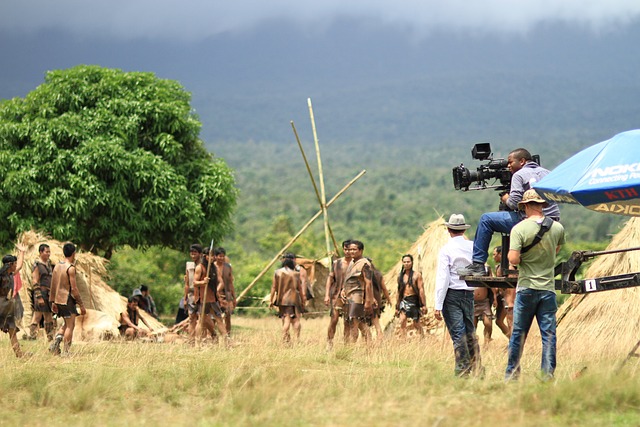
If pre-production is the planning of the war, production (or principal photography) is the battle itself. The schedule is brutal, the costs are astronomical (often hundreds of thousands of dollars per day), and everything that can go wrong, will go wrong.
On a blockbuster set, time is quite literally money. A filmmaker once noted that in production, "the budget IS the aesthetic," meaning every decision is a compromise between the artistic vision and the ticking clock . If a location is poorly chosen and requires a long travel time between setups, that wasted time eats into the shooting day, forcing the crew to rush critical scenes.
Amidst the chaos of wires, cameras, and green screens, there are actors trying to deliver genuine performances. A crucial, often overlooked aspect of production is cast welfare. Directors who succeed in this high-pressure environment are those who remember that cold, tired, or hungry actors cannot perform at their best. Providing simple comforts—a warm "green room," hot food, and clear communication—can be the difference between a flat scene and a memorable one .
While we often credit computers for blockbuster spectacles, many of the most convincing moments are practical. For The Avengers, the特效团队 didn't just rely on pixels for the Hulk's rampage on the Helicarrier. They built a steel armature on a track that crashed through a real, practical set at high speed. This created genuine destruction—real glass shattering, real steel bending—which the digital Hulk could then interact with, making the scene infinitely more believable .
Once the shooting wraps, the film disappears into the editing suite for months, sometimes years. This is post-production, where the movie is truly born. It is also the stage where the stories behind the scenes often become as dramatic as the ones on screen.
Imagine sifting through thousands of hours of footage to find the perfect take. Editors are the unsung heroes of pacing and narrative flow. They work with directors to cut scenes, rearrange plots, and sometimes save a film in the editing room. This phase also involves the sound designers, who build worlds from scratch—creating the unique metallic clank of a robot or the ambient hum of a spaceship .
The best visual effects are the ones you don't notice. For Wes Anderson's The Phoenician Scheme, the visual effects team at Freefolk faced a unique challenge: making effects look "unnoticeable" . In one scene, a miniature dam was built for a practical explosion. However, to protect the hero model, they used a simpler proxy for the actual blast. The VFX team then spent weeks in compositing, stitching the two plates together, re-timing the debris, and adding just the right amount of dust and "bugs in the air" to sell the reality. The goal wasn't to show off, but to support the story . [https://rabattde.de/products]
Sometimes, the story behind the camera eclipses the fiction in front of it. Fans are so hungry for this reality that they create their own documentaries, or "filmumentaries," as archivist Jamie Benning calls them. By stitching together rare archival footage, vintage interviews, and deleted scenes alongside the actual movie, Benning reveals the human struggles behind classics like Jaws and Star Wars .
For instance, the famous line "You're gonna need a bigger boat" from Jaws has long been cited as an improvisation by Roy Scheider. Yet, buried footage from a local convention suggests the line was actually in the script, forcing even the screenwriter to reconsider history. These human moments—the forgotten arguments, the happy accidents—remind us that blockbusters are not manufactured by machines, but by flawed, brilliant people .
A finished film is not a success until it is seen. The final hurdle in the journey of a blockbuster is its release. The modern marketing machine is a beast of its own. Studios employ a "digital first" strategy, releasing teasers, trailers, and interactive content to generate buzz . They analyze social media trends, time their releases for maximum global impact, and coordinate with massive retail chains for merchandise tie-ins.
Yet, even with all the data in the world, marketing a blockbuster remains an art. It’s about capturing the emotion of the film in a two-minute trailer without giving away the best jokes or the biggest spoilers. It’s a high-stakes game where the promotional campaign sets the audience's expectations, for better or worse.
The next time you sit down to watch the latest superhero epic or sci-fi adventure, look closely. Beyond the polish and the spectacle, try to see the layers: the exhausted grip adjusting a light at 3 a.m., the visual effects artist zooming in to paint individual pixels of "microhair" on a digital Hulk's nose, and the writer scribbling dialogue on a napkin because the script changed last minute . [https://rabattde.de/transparency]
The true story of a blockbuster is not the one on the screen; it is the story of the thousands of people who fought against the impossible to put it there. It is a testament to human creativity and collaboration. By understanding the blood, sweat, and tears behind the curtain, we don't diminish the magic—we deepen our appreciation for it. These films are not just entertainment; they are monuments to what we can achieve when we dream big and refuse to stop problem-solving.
If you are fascinated by the intricate processes that shape our culture and the transparency behind the products we love, explore more stories about craftsmanship and dedication here. [https://rabattde.de/blogs]


ℹ️ ADS

ℹ️ ADS


Comments
Leave a Reply