
ℹ️ ADS
ℹ️ ADS
Remember when playing a video game meant sitting on the couch, controller in hand, staring at a screen while the world around you faded away? That era isn't disappearing—but it's about to share the stage with something entirely new.
We're standing at the threshold of a fundamental shift in how we play, watch, and participate in entertainment. The lines between creator and audience, between physical and digital, between watching and doing—they're all blurring into something unprecedented. By 2030, the immersive entertainment market is projected to reach a staggering $935.8 billion, growing at over 23% annually . But behind those numbers lies a more interesting story: the transformation of fun itself.
Let's explore where interactive entertainment is heading and what it means for the way we'll spend our free time.
For decades, entertainment existed in tidy categories. You watched movies. You played games. You attended concerts. These were separate experiences with separate rules.
Not anymore.
The boundary between passive and active entertainment is dissolving. Interactive video platforms—tools that let creators build branching narratives, clickable hotspots, and shoppable content into videos—are already reshaping how we engage with media. The global interactive video platform market reached $2.6 billion in 2025 and keeps climbing .
What does this look like in practice? Imagine pausing a thriller to decide which door the detective should open. Or exploring a concert venue in 360 degrees while your favorite band performs, choosing your own angle and perspective. This isn't science fiction—it's happening now.
Netflix, the streaming giant built on passive viewing, has been quietly experimenting with interactive storytelling for years. More tellingly, they've partnered with Sandbox VR to create fully immersive location-based experiences, starting with a Squid Game VR activation that lets players literally step into the deadly children's games from the show . The message is clear: the future belongs to experiences that demand your participation, not just your attention. [https://rabattde.de/]
If there's one technology reshaping every corner of interactive entertainment, it's artificial intelligence. But not the clunky, scripted AI of yesterday. We're entering the era of generative AI that creates content on the fly, tailored specifically to you.
Imagine playing a detective game where the killer isn't pre-determined—where the AI generates suspects, motives, and clues based on your investigative style. Every playthrough becomes genuinely unique because the story adapts to you in real-time.
This is the promise of AI-driven interactive storytelling. According to industry analysts, generative AI will enable unprecedented personalization in interactive films and games, with narratives that branch in ways limited only by computational power . The technology is advancing so rapidly that some experts predict we'll soon struggle to distinguish between human-written and AI-generated dialogue in games.
At CES 2026, demonstrations of AI-powered personalization were everywhere. Companies showcased systems that analyze your behavior and preferences to deliver tailored experiences—not through obvious menus and settings, but through subtle adaptation . A game might notice you prefer stealth approaches and start designing encounters that reward quiet problem-solving. An interactive film might track which characters you find interesting and give them more screen time.
Here's perhaps the most exciting possibility: AI isn't just changing what we play—it's changing who gets to make games and interactive experiences.
Powerful AI tools are lowering the barriers to creation. Soon, describing a game idea aloud might be enough to generate basic code, assets, and mechanics. The "democratization of immersive authoring tools" is identified as a major trend shaping the market through 2030 . This means we'll see an explosion of creativity from people who never would have considered themselves game developers.
Of course, this raises profound questions. When AI can generate infinite entertainment tailored to each individual, what happens to shared cultural moments? A Chinese media analysis captures this tension perfectly, asking whether AI will ultimately "make entertainment to death" by eliminating the common experiences that bind us together . It's a question worth pondering as we hurtle toward this future. [https://rabattde.de/products]
While AI transforms what happens inside our devices, another revolution is happening outside them. Location-based entertainment—experiences you physically visit—is emerging as the fastest-growing frontier of interactive entertainment.
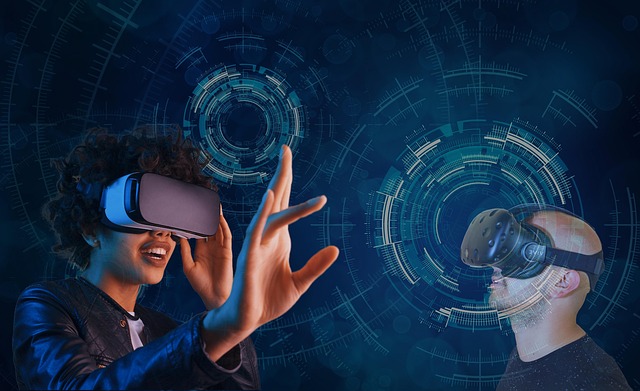
Remember when VR meant isolating yourself with a headset while your friends watched? Those days are ending. Companies like Sandbox VR and Zero Latency have pioneered "free-roam" multiplayer VR where groups of friends physically explore virtual worlds together. You can see each other, coordinate movements, and share reactions—just like in the real world, but with dragons.
The numbers tell the story: the immersive technology in gaming market is projected to grow from $23.8 billion in 2026 to $66.6 billion by 2030, a staggering 29.3% annual growth rate . Much of this growth comes from location-based entertainment—physical venues where people gather for shared immersive experiences.
Theme parks have always offered immersive experiences, but they required billion-dollar investments and years of construction. Now, modular, scalable immersive attractions are popping up everywhere—in shopping malls, abandoned retail spaces, urban entertainment districts.
These new venues use standardized technology that can be quickly reconfigured for different intellectual properties. One month, it's a zombie survival experience. The next, it's a magical adventure through a fantasy kingdom. This flexibility makes immersive entertainment economically viable in ways it never was before .
The hardware is evolving too. Sony's PlayStation VR2, released in 2023, brought 4K HDR visuals, eye tracking, and haptic feedback to consumer VR . Meanwhile, advances in 5G networks—which reached 290 million subscriptions in India alone by 2024—are enabling cloud-rendered VR that doesn't require powerful local hardware . Soon, high-quality immersive experiences will be accessible to anyone with a headset and a fast connection.
For years, "interactive movies" occupied an awkward middle space—not quite games, not quite films, appreciated by few. That's changing fast.
The global market for interactive film and game hybrids is projected to grow from $2.4 billion in 2026 to $5.4 billion by 2032, a healthy 14.2% annual clip . What's driving this growth? Several factors:
Streaming platforms entering gaming. Netflix, Amazon Prime Video, and others now offer games alongside their video libraries. This removes friction—subscribers can try interactive experiences without separate purchases or downloads.
Social sharing drives discovery. Nothing generates interest like watching your favorite streamer panic over a life-or-death choice in an interactive thriller. Platforms like Twitch and YouTube have become massive marketing engines for interactive entertainment .
Star power attracts new audiences. When famous actors, voice artists, and even idol groups appear in interactive productions, they bring their fan bases with them. This expands the audience beyond traditional gamers to include entertainment fans who might never have considered interactive content before .
Of course, this growth comes with growing pains. Interactive productions face unique challenges. They require multiple story branches, which means shooting more footage or building more game content than linear productions. Production costs can balloon quickly, creating significant financial risk .
There's also the question of audience expectations. Viewers accustomed to high-quality television and film apply the same standards to interactive productions. If the acting feels flat or the writing weak, interactivity won't save it. The bar keeps rising. [https://rabattde.de/transparency]
One of the most fascinating frontiers in interactive entertainment involves making digital experiences feel physically real. Haptic technology—devices that simulate touch and texture—is advancing rapidly.
At the arcade level, companies like LAI Games are partnering with major publishers like Ubisoft to create attractions featuring "groundbreaking driving and steering haptics" and "high-precision motion by D-BOX" . Players can feel the rumble of an engine, the jolt of impact, the texture of virtual roads.
For home users, haptic gloves and suits remain expensive but are gradually becoming more accessible. Meanwhile, simpler haptics—like the PlayStation VR2's headset vibration, which simulates the sensation of an object grazing your head—are becoming standard features.
There's something counterintuitive happening here. As digital experiences become more immersive and capable, people are paradoxically seeking out physical, shared experiences more than ever. Live concerts, immersive art exhibitions, and location-based entertainment are thriving.
This isn't a contradiction. When everything digital becomes infinitely available and algorithmically optimized, physical experiences gain value precisely because they're finite and unoptimizable. They can't be perfectly tailored to you—and that's the point. You're sharing something real with other real people .
Companies like teamLab, Meow Wolf, and Moment Factory have built massive followings by creating immersive art environments that blend digital projection with physical construction. These aren't games in any traditional sense, but they're undeniably interactive and undeniably popular. Visitors spend hours exploring, touching, and participating .
Not everyone will thrive in this transformed entertainment ecosystem. Industry analysts predict a ruthless sorting over the next decade.
High-end, premium experiences. Blockbuster games with production values that rival Hollywood movies will continue to find massive audiences. These experiences offer something AI-generated content cannot: intentional, curated artistry from named creators .
Location-based entertainment. Physical venues that offer shared, embodied experiences will capture a growing share of entertainment spending. They provide something streaming cannot: genuine togetherness.
Platforms that enable creation. Companies that build the tools for interactive content creation—game engines like Unity and Unreal, AI platforms, distribution platforms—will benefit regardless of which specific content wins.
Mid-tier, undifferentiated content. Games and interactive experiences that lack either the polish of premium productions or the cost advantages of AI-generated content will struggle. The middle ground is disappearing .
Pure aggregation without curation. As AI generates infinite content, simply aggregating it becomes less valuable. The real value shifts to curation, community, and context.
Experiences that ignore social connection. In a world of infinite solo entertainment options, experiences that facilitate genuine human connection will command premium attention and spending.
If you're reading this as someone who simply enjoys entertainment—games, movies, immersive experiences—what should you take away?
First, expect more agency. The line between consuming and participating will continue to blur. You'll make choices that shape narratives, influence virtual worlds, and determine outcomes. Entertainment will become more active, more personal.
Second, expect more variety. The explosion of AI-assisted creation means more experiments, more niche genres, more weird and wonderful experiences. Not all will succeed, but the sheer volume of experimentation guarantees surprising gems.
Third, expect more reasons to leave your house. Counterintuitively, the digital revolution in entertainment is making physical experiences more valuable, not less. Venues that offer shared immersion—whether VR arcades, immersive art spaces, or next-generation theme parks—will multiply.
Finally, expect to pay for quality. As AI-generated content floods the market, human-made entertainment may become a premium category. Just as handmade goods command higher prices in a world of mass production, intentionally crafted interactive experiences may become luxury items. [https://rabattde.de/blogs]
Standing at this intersection of technological possibility and human desire, one thing becomes clear: the future of interactive entertainment isn't really about technology at all. It's about us—our hunger for stories, our need for connection, our delight in discovery.
The tools will change. The platforms will evolve. New companies will rise and fall. But the fundamental appeal of interactive entertainment remains what it's always been: the chance to step into another world and, for a little while, live another life.
AI may generate infinite variations of that experience. VR may make it indistinguishable from reality. Haptics may let us feel virtual raindrops on our skin. But the magic isn't in the technology—it's in the moment of forgetting yourself, of being somewhere else, of sharing wonder with others.
That's not changing. It's just getting better.
Whether you're a dedicated gamer, a casual viewer curious about interactive films, or someone who hasn't yet tried immersive entertainment, the coming years offer something exciting: more ways to play, more ways to connect, more ways to be amazed. The only question is which adventure you'll choose first.


ℹ️ ADS

ℹ️ ADS




Comments
Leave a Reply