


ℹ️ Reklama
Technology
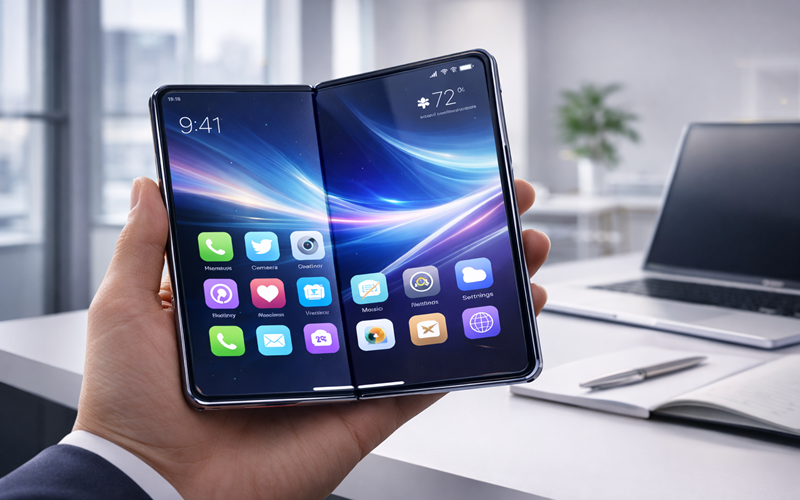
📱 Sarlavha (EN): The 2026 Tech Revolution: From Foldable iPhones to Context-Aware AI Agents
The year 2026 is not just another lap around the sun for the tech industry; it is a pivotal moment where concepts that have been simmering for years finally boil over into reality. We are moving past the simple "chatbot" phase of AI and entering an era of true integration—where intelligence is embedded into everything, from the devices in our pockets to the cars on our streets and the very infrastructure of our businesses. Forget incremental updates; these are the revolutionary trends that will define technology in 2026.
1. Hardware Gets a Major Refresh: The Foldable iPhone and Beyond
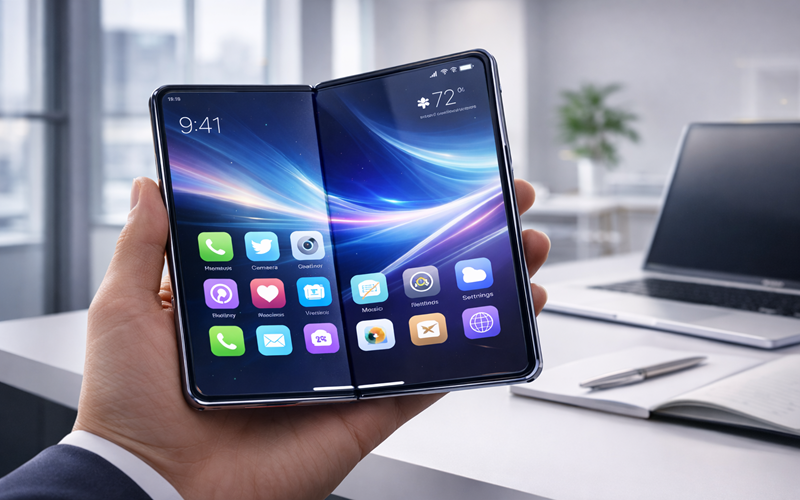
For years, the smartphone market has felt stagnant. That changes in 2026. After years of rumors, Apple is finally expected to launch a foldable iPhone this fall . This won't just be a larger screen; it represents the most significant design shift for the iPhone since 2007, forcing the entire mobile ecosystem to rethink what a phone can be . But the hardware innovation isn't stopping at phones. OpenAI, in a surprising partnership with legendary designer Jony Ive, is rumored to be working on a completely new category of AI-powered devices—potentially an AI pen that captures handwriting and acts as a constant, screen-less companion . This signals a future where our interaction with technology is no longer confined to glowing rectangles but becomes ambient and intuitive .
2. The Self-Driving Dream Arrives in Europe
While autonomous taxis have been a common sight in parts of the United States, their arrival in Europe has been a long time coming. 2026 is the year that changes. Google's Waymo has announced plans to launch its robotaxi service in London . The chaotic, narrow, and unpredictable streets of London will be the ultimate test for self-driving technology. If Waymo succeeds here, it proves that autonomous driving can work anywhere [citation 7]. However, recent incidents in San Francisco, where robotaxis were paralyzed by a power outage, show that the technology is still maturing and regulators will be watching these European pilots very closely .
3. The Dawn of "Physical AI"
At the Consumer Electronics Show (CES) 2026 in Las Vegas, one theme was impossible to miss: AI is leaping off the screen and into the physical world . This is "Physical AI"—the integration of intelligence into robots, machinery, and the environment around us. We saw robots that can now climb stairs and fold laundry, moving from "looking cool" to actually performing useful tasks . Innovations in digital twins and simulation training are allowing these machines to learn and adapt faster than ever before . This shift means that AI is no longer just about software and services; it's about automating and enhancing the tangible world, from manufacturing floors to our own homes .
4. Context Engineering: The Secret Sauce for Successful AI
As businesses move from experimenting with AI to deploying autonomous AI agents, a critical challenge has emerged: most Large Language Models (LLMs) are generalists. They know the internet, but they don't know your company. This is where Context Engineering becomes the most crucial skill of the year .
Context engineering is the practice of feeding AI agents the right information—your company's internal data, documents, emails, and security logs—at the right time . An AI without context will "hallucinate" or provide generic, useless answers. An AI with great context can analyze a client's portfolio, identify security threats, or validate complex engineering designs with remarkable accuracy . The companies that win in 2026 will be those that master this discipline, building a "knowledge map" that makes their AI agents truly useful . Industry leaders like Elastic are already providing tools to assemble these business-ready agents, moving the focus from the model itself to the unique data that powers it .
5. The Rise of GEO (Generative Engine Optimization)
For decades, digital marketing has been dominated by Search Engine Optimization (SEO). But how people find information is changing. More and more consumers are getting their answers directly from AI platforms like ChatGPT, Google Gemini, and Perplexity, bypassing the traditional list of blue links entirely . This has given birth to a new discipline: Generative Engine Optimization (GEO) .
GEO is the practice of optimizing your content so that AI "answer engines" cite it in their summaries. It's a massive shift from optimizing for a search algorithm to optimizing for an AI's understanding. Recent research shows that by adding hard data, citing experts, and filling "opportunity voids" with specific facts, you can increase your chances of being cited by an AI by up to 40% . The market for GEO services is exploding, with a projected global spend of $120 billion in 2026 and a staggering annual growth rate of over 150% . By 2028, visits driven by generative AI search are expected to surpass those from traditional search . For any business, ignoring GEO in 2026 is like ignoring SEO in the early 2000s.
The Verdict for 2026: This is a year of convergence. Physical hardware is getting a long-overdue upgrade, AI is gaining a physical body, and the very fabric of how we interact with information is being rewoven by context-aware intelligence and new discovery engines. The companies and individuals who adapt to these fundamental shifts won't just survive; they will define the next decade.
What's your reaction?
0

AWESOME!
0

LOVED
0

NICE
0

LOL
0

FUNNY
0

EW!
0

OMG!
0

FAIL!
Popular News
Recent News

ℹ️ Reklama
Comments
Leave a Reply