
ℹ️ ADS
ℹ️ ADS
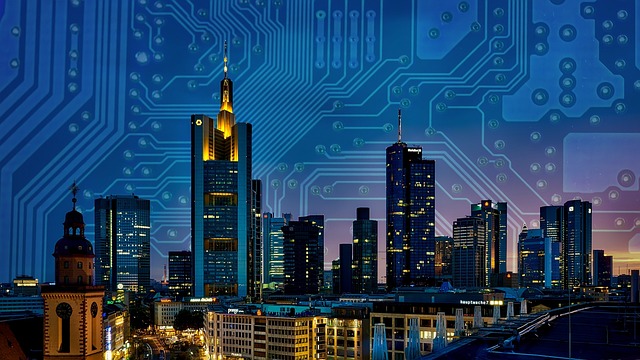
Imagine living in a city that predicts traffic jams before they happen, where streetlights dim automatically when no one is around, and where registering a company takes minutes instead of weeks. This isn't science fiction—it's happening right now in the world's most innovative cities.
We're standing at a remarkable turning point in human history. According to UN projections, nearly 68% of the world's population will call cities home by 2050 . That's two-thirds of humanity concentrated in urban spaces. This massive shift brings enormous challenges—congestion, pollution, energy demands, public safety concerns—but it also creates unprecedented opportunities for innovation.
The cities leading innovation today aren't just installing a few sensors or launching government apps. They're fundamentally reimagining entire urban ecosystems, integrating artificial intelligence, renewable energy, and data-driven governance into the fabric of daily life . They're becoming what some experts call "agentic states"—places you can interact with digitally, even before you arrive physically .
In this article, we'll explore the global cities at the forefront of innovation in 2026, examine what makes them successful, and uncover lessons for entrepreneurs, policymakers, and citizens who want to understand where the future is being built. For a deeper dive into the tools and technologies powering these transformations, check out our curated list of innovative products that are shaping smart cities worldwide.
Before diving into specific cities, it's worth understanding how innovation is measured. The Multipolitan Startup Friendly Cities Index 2026 evaluates urban centers based on entrepreneurial activity, innovation ecosystems, talent development, and business agility . Similarly, the IMD Smart City Index assesses how cities use technology to improve quality of life, ranking Zurich as the world leader for the sixth consecutive year .
These rankings matter because they reflect a fundamental truth: cities that attract innovative people and companies thrive economically. As Nirbhay Handa, CEO of Multipolitan, puts it: "Cities are the new nation states. Wealth, talent and innovation concentrate within cities. They are the real frontiers of innovation" .
What sets leading innovation cities apart? According to recent research, successful cities share several characteristics:
Frictionless access to capital through deep venture capital pools
Advanced digital networks that enable seamless connectivity
Deep talent pools supported by world-class educational institutions
Quality of life that sustains long-term creativity and productivity
Perhaps most importantly, these cities treat founders and innovators as customers rather than applicants. They design policies, infrastructure, and services specifically to attract and retain the people building the future .
For the sixth year running, Zurich has secured the top spot in the IMD Smart City Index, consistently leading ahead of Oslo in second place . What makes this Swiss city special isn't flashy technology demonstrations—it's deeply integrated systems that work seamlessly.
Zurich receives top marks across multiple dimensions: healthcare, recycling, public transport, new jobs, political engagement, and internet speed . The city demonstrates that being smart isn't about size—it's about quality and thoughtful integration of technology with citizen needs.
The city's success stems from its exceptional educational standards, high quality of life, and advanced digital readiness, which offset its comparatively smaller scale of venture activity . Zurich proves that smaller, well-managed urban centers can outperform megacities by focusing on what matters most to residents.
Singapore consistently ranks among the world's smartest cities, climbing back to 5th place in the Smart City Index by 2024 . The city-state has built its reputation on fully integrated digital infrastructure that touches nearly every aspect of daily life.
What sets Singapore apart is its Smart Nation initiative, launched in 2014. The nation maintains a wide high-speed telecommunication network, with every part of the city integrated with smart technology—from its brilliant traffic control room to impressive healthcare tech .
The results speak for themselves:
76% of citizens say smart initiatives make Singapore a better place to live
86% of business executives agree
72% of residents are willing to share personal data to help lower energy costs
This level of trust is rare and shows how the government has balanced innovation with transparency. Remote health monitoring saves citizens nearly 10 hours per year, making life noticeably easier for families caring for elderly relatives .
Singapore also distinguishes itself through regulatory clarity, taxation efficiency, and digital infrastructure excellence. It continues to set the standard for business agility in Asia and serves as a global benchmark for founder mobility and cross-border scalability .
Dubai's rise to fourth place in the 2025 IMD Smart City Index represents the biggest jump of any city—from 12th to 4th place . The city aims to become the "happiest and smartest city on Earth," and the transformation is real, not just marketing hype.
Dubai leverages AI and big data analytics to enhance government services through the Dubai Now app, which centralizes over 130 government services. Residents can pay bills, renew licenses, and access public services from one platform .
Key achievements include:
AI-powered traffic systems that reduce congestion by up to 20%
Being the world's first paperless government (achieved by end of 2021)
Digitizing over 1 billion paper transactions annually
Dubai stands out for its regulatory efficiency and digital ambition, with a rapid ascent reflecting an economy deliberately designed for founders. It's fast to incorporate, easy to operate, and well connected to global markets . The city also hosts the world's largest single-site solar park, the Mohammed Bin Rashid Al Maktoum Solar Park, with smart grids and AI-powered energy monitoring already in place .
Despite rising costs and well-documented challenges, San Francisco continues to set the global benchmark as the most startup-friendly city . Its advantages remain formidable:
Deep venture capital pools unmatched anywhere in the world
Dense concentration of startups creating network effects
Mature innovation ecosystem supported by robust digital infrastructure
Strong talent base fed by nearby Stanford and UC Berkeley
The city's depth of entrepreneurial activity and strong innovation ecosystem keep it at the top of global rankings, even as other cities work to replicate its success.
Tokyo's smart mobility initiative focuses on integrating AI-powered on-demand transportation services with the city's extensive public transportation network. The city is implementing autonomous shuttle services in select areas using AI to determine efficient routes .
The results are impressive:
25% reduction in travel times during peak hours
17% decrease in energy consumption compared to traditional taxi services
Long-term goal of expanding autonomous electric vehicles toward zero-emissions city status by 2050
Tokyo has also been experimenting with adaptive traffic signals that use AI to adjust timings based on real-time congestion patterns. Early results show reduced wait times and emissions .
In late 2024, Toyota and NTT announced plans to invest a total of 500 billion yen by 2030, beginning development of a Mobility AI Platform in 2025. This massive investment demonstrates Tokyo's commitment to zero-accident mobility through infrastructure-cooperative approaches .
Oslo has held the second spot in the Smart City index since 2019, earning AAA ratings for its leadership in green and inclusive urban development. It was named the European Green Capital 2019 .
The numbers are staggering:
Electric vehicles account for 40% of all private cars
90% of new car sales in 2024 were electric
Oslo's renewable energy system is powered largely by hydropower, covering about 60 percent of its total consumption. Its automated toll system encourages the use of zero-emission vehicles and funds eco-friendly transportation projects .
What's compelling about Oslo is how the city has integrated sustainability into the urban fabric rather than treating it as an add-on. The FutureBuilt program, a decade-old initiative of 50 projects, promotes low-carbon, high-quality architecture near transit hubs, showing that green development and quality design aren't mutually exclusive .
Copenhagen aims to become the world's first CO2-neutral capital by 2025, committing to completely removing the city's 2 million tons of carbon footprint over a decade, even as the city continues to grow .
Progress to date is remarkable:
By 2021, Copenhagen had reduced CO2 emissions by 72.6% compared to the 2005 baseline
62% of Copenhageners commute by bike daily, thanks to over 400 kilometers of dedicated bike lanes
Traditional district heating now accounts for virtually the entire municipality's heat supply
Smart meters, AI-powered traffic control, and IoT-connected street lighting are just a few ways the city leverages data and automation to improve energy efficiency. Copenhagen proves you can combine rapid growth with dramatic emissions reductions when you commit to smart infrastructure and give people real alternatives to cars.
The European Commission recently announced Grenoble Alpes Métropole and Aalborg as the winners of the 2026 European Capital of Innovation Awards .
Grenoble Alpes Métropole (France) received the title of European Capital of Innovation and a €1 million prize. The city secured the top spot through its forward-thinking approach to sustainable urban development, emphasizing renewable energy solutions, smart infrastructure, and community-driven innovation to tackle environmental and social challenges .
Aalborg (Denmark) was named the European Rising Innovative City, receiving a €500,000 prize. Aalborg distinguished itself by effectively integrating technology into urban planning, fostering a vibrant innovation ecosystem that values collaboration across diverse sectors, including education, healthcare, and clean energy .
Runners-up included Rotterdam (Netherlands), Liverpool (United Kingdom), San Sebastian (Spain), and Nicosia (Cyprus), demonstrating Europe's deep bench of innovative mid-sized cities .
For insights into how European cities are building startup ecosystems, explore our blog for articles on entrepreneurship and innovation.
Seoul continues advancing smart technologies, including digital governance and connectivity, often placing it among top smart cities in global rankings . South Korea's capital has embraced digital transformation across government services, making interactions between citizens and city administration remarkably efficient.
The city's approach combines high-speed connectivity infrastructure with user-friendly digital services. Seoul's smart city initiatives span from intelligent transportation systems to comprehensive digital healthcare platforms.
In a groundbreaking move, Seoul is pursuing a paradigm shift in urban safety through "Generative AI Monitoring." The city plans to invest KRW 27.1 billion in 2026 to advance intelligent CCTV systems and pilot generative AI that analyzes the context of hazardous situations .
Early results are impressive:
Detection accuracy of intelligent CCTV systems increased from 36% to 81%
False alerts decreased from 4.54 million to 0.35 million incidents per month
By applying smaller Large Language Model (sLLM)-based generative AI, Seoul aims to move beyond simple detection to implement context-aware monitoring that analyzes the preceding and subsequent context of risk situations .
According to the Global科创City Innovation Talent Development Index released by Fudan University, Beijing and Shanghai rank among the world's top innovation cities .
Beijing ranks fourth globally and first in China. The city's talent resources rank number one globally, with a talent pool of 8.029 million people as of 2023. Beijing's contribution rate of talent to economic growth continues to rise year by year .
Shanghai ranks sixth globally and demonstrates exceptional strengths:
Number one globally in talent environment indicators
Active researcher population among the world's largest
66 unicorn enterprises as of 2024, concentrated in integrated circuits, AI, biomedicine, and new energy vehicles
The Global Innovation Finance Index also places multiple Chinese cities in the global top fifteen, including Beijing (4th), Hong Kong (8th), Shanghai (9th), and Shenzhen (12th) . These rankings reflect China's emergence as a multi-tiered, echeloned innovation finance ecosystem with global competitive advantages in specific sectors.
Huawei and iSSTech recently launched a City Intelligent Agent Solution that illustrates how leading cities think about innovation architecture . The five-layer framework includes:
Intelligent sensing: Strengthening sensory terminals for bidirectional interaction across all urban scenarios
Intelligent network: Establishing a ubiquitous digital neural network for seamless connectivity
Intelligent brain: Integrating AI and large model capabilities for efficient urban operations
Intelligent agent: Nurturing specialized agents for thousands of industries
Super assistant: Creating minimalist and inclusive intelligent interaction portals
This framework shows that successful innovation cities think systematically about technology integration rather than implementing isolated solutions.
Cities leading innovation treat founders as customers. They design policies and services specifically to attract entrepreneurial talent .
Key elements include:
Digital residency programs: Singapore, Estonia, and Dubai offer digital residency and AI-enabled civic services, allowing founders to register companies and access public infrastructure remotely
Rapid incorporation: Dubai's efficiency and speed of company setup set global benchmarks
Clear regulation: Singapore's regulatory clarity and taxation efficiency create predictability for businesses
The Digital State Project report identifies Singapore, Palau, Tuvalu, Ukraine, and Estonia as emerging agentic states offering digital residency, effectively becoming "cities you can log into" .
Leading innovation cities understand that attracting talent requires more than business-friendly policies—it requires exceptional quality of life .
Zurich's top rankings for healthcare, public transport, green spaces, and internet speed demonstrate that quality of life and innovation go hand in hand . Geneva earns AAA ratings for aspects such as green spaces, access to the education system, and participation in urban projects .
Valencia's emergence as a leading European startup hub combines competitive operating costs with high quality of life, essential for attracting and retaining international talent .
Successful innovation ecosystems don't happen by accident. They require intentional collaboration between government, academia, and private sector.
Valencia's ecosystem exemplifies this model, with initiatives such as Startup Valencia, Valencia Innovation Capital, and Invest in Valencia working in close coordination to attract investment and strengthen international positioning .
Shanghai's Lin-gang Special Area demonstrates how government can support innovation through sci-tech innovation communities, startup support funds, and incubation networks. The area launched four sci-tech innovation communities, including Dishui Lake Financial Bay, designed to provide early-stage ventures with affordable workspace .
If you're a founder deciding where to locate your startup, consider these factors:
Access to capital: San Francisco remains unmatched, but Singapore, London, and New York offer deep venture pools
Regulatory efficiency: Dubai and Singapore excel at making business setup frictionless
Talent availability: Zurich, Boston, and Shanghai offer deep talent pools from world-class educational institutions
Quality of life: Oslo, Copenhagen, and Geneva demonstrate that innovation doesn't require sacrificing livability
Digital infrastructure: Seoul and Singapore set global standards for connectivity and digital services
The hybrid growth model suggested by Multipolitan's Chee Okebalama is worth considering: "Build in Lagos and connect to global hubs where capital, distribution and access are easier" . This approach applies beyond Lagos—consider maintaining operational bases in cost-effective locations while accessing global markets through innovation hubs.
Cities seeking to become innovation hubs should focus on fundamentals:
Treat founders as customers: Design policies, infrastructure, and services to attract and retain entrepreneurial talent
Invest in digital infrastructure: High-speed connectivity, digital identity systems, and e-governance platforms are table stakes
Foster public-private collaboration: Valencia's model of coordinated initiatives across government, academia, and private sector creates multiplier effects
Focus on quality of life: Green spaces, public transport, healthcare, and education matter as much as business incentives
Measure what matters: Regular assessment of innovation ecosystems enables evidence-based policy adjustments
The European Union's European Startup and Scaleup Hubs pilot, with a €20 million budget, represents one model for intentionally building connected innovation networks across regions .
The cities leading innovation in 2026 share a common understanding: in a world where talent and capital can locate anywhere, urban centers must earn the right to be chosen. They're not just building smart infrastructure—they're creating environments where human creativity can flourish.
From Zurich's precision integration of technology with quality of life to Singapore's comprehensive digital governance, from Dubai's founder-friendly policies to Seoul's generative AI safety systems, these cities demonstrate that innovation is about more than flashy technology. It's about creating urban ecosystems that work better for the people who live in them.
For entrepreneurs, the message is clear: your choice of city matters. The right ecosystem can accelerate your journey, connect you with capital and talent, and provide the quality of life that sustains long-term creativity. For a deeper look at tools and resources that can help you build your venture, explore our transparency page and discover how we support founders worldwide.
For policymakers, the imperative is equally clear: cities that fail to innovate will fall behind. The competition for talent and capital is global, and the cities that treat founders as customers, invest in digital infrastructure, and maintain exceptional quality of life will win.
As we look toward 2030 and beyond, one thing is certain: the cities leading innovation won't be those with the most sensors or the fastest internet. They'll be the cities that most effectively integrate technology with human needs, creating urban environments where both people and businesses can thrive.
The future is being built in these cities today. The question is: will you be part of it?




ℹ️ ADS

ℹ️ ADS



Comments
Leave a Reply