
ℹ️ ADS
ℹ️ ADS
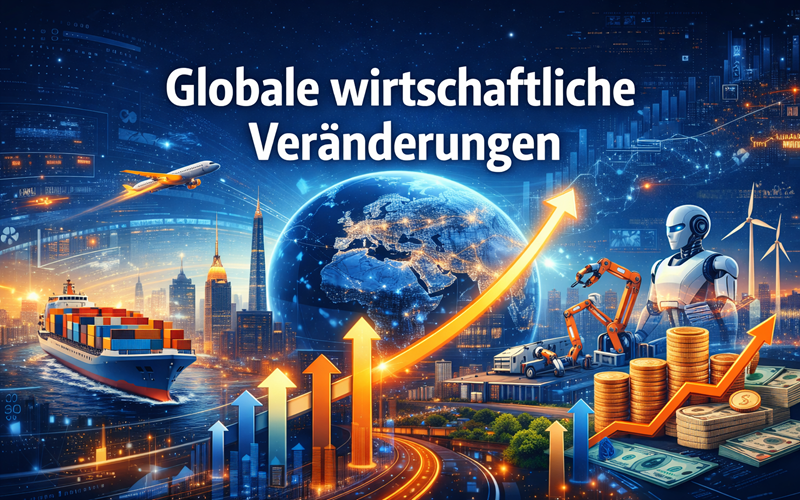
The global economy is constantly evolving. In recent years, the world has experienced some of the most significant economic transformations in decades. From technological innovation and geopolitical tensions to changing consumer behavior and digital transformation, these factors are reshaping how businesses operate and how economies grow.
Experts often describe the current era as a period of major global economic shifts. These changes affect everything—from international trade and supply chains to entrepreneurship, employment, and digital commerce.
According to data from the International Monetary Fund (IMF), global economic growth patterns are becoming more dynamic, with emerging markets, technological innovation, and digital platforms playing increasingly important roles.
For businesses and entrepreneurs, understanding these global shifts is essential. Companies that adapt early to economic changes can gain competitive advantages, while those that ignore them may struggle to remain relevant.
In this article, we explore the most important global economic trends, how they affect industries, and what businesses and consumers can do to prepare for the future.
Before examining specific trends, it is important to understand what economists mean by economic shifts.
Economic shifts refer to large structural changes in the global economy that alter how markets function.
These shifts can be driven by:
technological innovation
demographic changes
geopolitical developments
environmental policies
changes in consumer behavior
Such transformations can reshape entire industries and create new opportunities.
One of the most important economic transformations today is the rapid growth of the digital economy.
Digital platforms, e-commerce, cloud computing, and artificial intelligence are transforming how businesses operate.
Key aspects of the digital economy include:
online marketplaces
digital services
remote work infrastructure
cloud technology
data-driven decision making
Companies of all sizes now rely on digital tools to increase productivity and expand their reach.
Many entrepreneurs are also exploring platforms that offer special deals on software, tools, and digital services, helping them reduce operational costs while building scalable businesses. Resources such as https://rabattde.de/products provide access to useful tools and services for businesses operating in the digital marketplace.
Another major economic shift involves the restructuring of global supply chains.
For decades, many companies relied on highly centralized production systems. However, recent disruptions—including pandemics, geopolitical tensions, and logistical challenges—have exposed vulnerabilities in global supply networks.
As a result, companies are adopting new strategies:
regional supply chains
diversified manufacturing locations
increased automation
local sourcing strategies
These adjustments aim to improve resilience and reduce dependence on single production hubs.
Supply chain resilience has become a key strategic priority for multinational companies and small businesses alike.
Inflation has become a central economic topic worldwide.
After years of relatively stable inflation rates, many economies experienced significant price increases due to supply shortages, energy costs, and global economic uncertainty.
Central banks have responded by adjusting monetary policies.
Important economic responses include:
higher interest rates
tighter financial conditions
controlled money supply
inflation monitoring policies
These changes affect businesses, consumers, and investors.
Companies must carefully manage costs, pricing strategies, and investment decisions in response to these financial conditions.
Emerging markets are becoming increasingly important players in the global economy.
Countries in Asia, Africa, and Latin America are experiencing rapid economic development, driven by:
young populations
urbanization
technological adoption
expanding middle classes
These regions represent new growth opportunities for global businesses.
Companies seeking expansion opportunities often look toward emerging markets to reach new customers and diversify revenue streams.
Environmental concerns are driving another major global economic transformation.
Governments, businesses, and consumers are increasingly prioritizing sustainable economic practices.
The green economy focuses on:
renewable energy
sustainable production
circular economy models
reduced carbon emissions
Investments in renewable energy technologies such as solar and wind power are increasing rapidly.
Businesses that integrate sustainability into their operations often benefit from stronger brand reputation and long-term resilience.
Consumer expectations are evolving rapidly.
Modern consumers value:
convenience
transparency
sustainability
competitive pricing
personalized experiences
Online shopping and digital comparison platforms have also changed purchasing behavior.
Consumers now frequently search for discount opportunities, promotions, and special deals before making purchases. Many online users rely on curated deal platforms like https://rabattde.de/coupons to discover discounts and save money on digital products and services.
This shift toward value-driven consumption is influencing pricing strategies across many industries.
Technological innovation continues to drive global economic change.
Key technologies shaping the future include:
artificial intelligence
robotics
machine learning
blockchain
big data analytics
Automation is transforming industries such as manufacturing, logistics, finance, and healthcare.
While automation can improve efficiency, it also requires businesses to invest in workforce training and digital skills development.
Companies that successfully adopt new technologies often achieve significant productivity gains.
Entrepreneurship remains one of the most powerful drivers of economic transformation.
Startups and small businesses contribute to innovation, job creation, and technological advancement.
Today’s entrepreneurs benefit from unprecedented access to:
digital tools
global markets
remote collaboration
online funding platforms
Websites like https://rabattde.de often highlight useful digital resources, helping entrepreneurs discover services and solutions that support business growth.
These tools enable startups to operate more efficiently and compete globally.
Work culture is undergoing a major transformation.
Remote work, once considered a niche practice, has become mainstream.
Benefits of remote and hybrid work models include:
improved work-life balance
reduced operational costs
access to global talent
increased flexibility
Companies are redesigning workplaces and management structures to accommodate distributed teams.
This shift is also reshaping real estate markets and urban economic patterns.
Despite opportunities, the global economy faces ongoing uncertainty.
Challenges include:
geopolitical tensions
energy market fluctuations
technological disruption
financial instability
Businesses must remain flexible and prepared to adapt.
Key strategies include:
diversifying revenue streams
investing in digital transformation
strengthening supply chain resilience
focusing on customer value
Organizations that maintain agility are better equipped to navigate uncertainty.
Major global economic shifts are transforming the way businesses operate and how societies develop. From the rise of the digital economy to the growth of emerging markets and the expansion of sustainable industries, these changes are shaping the future of the global marketplace.
Understanding these trends allows businesses, entrepreneurs, and consumers to make informed decisions.
Companies that embrace innovation, adapt to changing consumer expectations, and leverage modern technologies will be better positioned to succeed in the evolving economic landscape.
The future economy will belong to organizations that remain flexible, forward-thinking, and globally aware.


ℹ️ ADS

ℹ️ ADS




Comments
Leave a Reply