

ℹ️ ADS
ℹ️ ADS
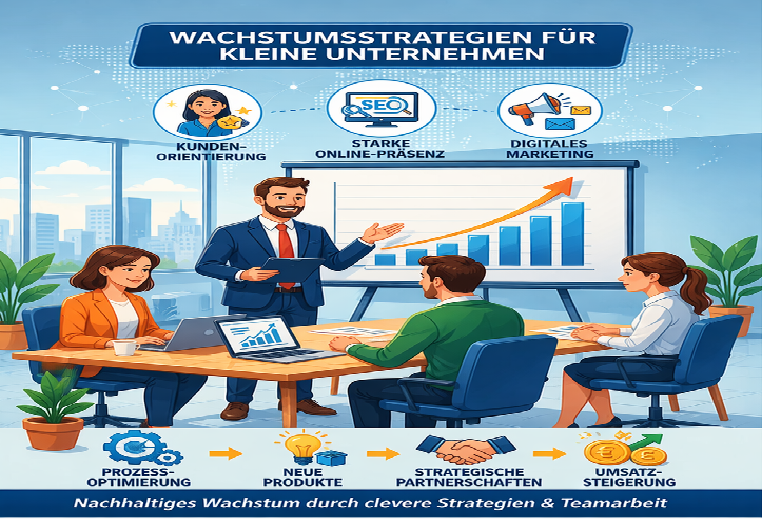
Running a small business is exciting, but it also comes with constant challenges. From limited resources and intense competition to evolving customer expectations, entrepreneurs must continuously adapt to survive and grow. While launching a business requires courage and vision, scaling it successfully requires strategic planning, smart decision-making, and efficient resource management.
According to recent global market research, over 50% of small businesses fail within the first five years. The primary reasons are poor financial planning, weak marketing strategies, and inability to adapt to changing market conditions.
However, the good news is that growth is achievable when businesses adopt proven small business growth strategies that focus on innovation, customer satisfaction, operational efficiency, and digital transformation.
In this comprehensive guide, we will explore powerful strategies small businesses can implement to scale sustainably, increase profitability, and remain competitive in today’s fast-moving business environment.
Before diving into strategies, it's important to understand what growth actually means for a small business.
Growth is not just about increasing revenue. It includes:
Expanding customer base
Improving operational efficiency
Increasing brand visibility
Launching new products or services
Entering new markets
Building long-term sustainability
Successful businesses focus on balanced growth rather than short-term profit spikes.
Key indicators of healthy business growth include:
Rising customer retention rates
Consistent revenue growth
Improved brand recognition
Strong market positioning
Scalable business processes
Many small businesses operate without a long-term growth strategy. They focus only on daily operations instead of building a roadmap for expansion.
A clear strategy helps businesses:
Allocate resources efficiently
Identify new opportunities
Reduce operational risks
Build competitive advantages
Improve decision-making
Without a strategy, businesses often rely on luck instead of structured planning.
Customer experience is one of the most powerful drivers of small business growth.
Studies show that 86% of customers are willing to pay more for a better experience. Businesses that prioritize customer satisfaction tend to achieve stronger loyalty and higher lifetime value.
Ways to improve customer experience include:
Customers appreciate businesses that understand their preferences.
Examples:
Personalized product recommendations
Customized offers and promotions
Tailored email communication
Quick responses can significantly increase customer satisfaction.
Effective methods include:
Live chat support
Email support
AI chatbots
Knowledge base sections
Always listen to your customers.
Collect feedback through:
Online surveys
Customer reviews
Social media comments
Direct interviews
Feedback helps identify areas for improvement and innovation.
In today’s digital economy, a business without an online presence is at a serious disadvantage.
Consumers increasingly rely on the internet to research products and services before making purchasing decisions.
Key components of a strong online presence include:
Your website acts as your digital storefront.
It should include:
Clear branding
Fast loading speed
Mobile responsiveness
Easy navigation
Clear call-to-action buttons
SEO helps your business appear in search engine results.
Important SEO practices include:
Keyword optimization
High-quality content creation
Internal linking
Technical SEO improvements
Businesses that invest in SEO often experience long-term organic traffic growth.
Social media platforms allow businesses to connect directly with customers.
Popular platforms include:
TikTok
Twitter (X)
Consistent posting, engagement, and storytelling help build brand awareness.
Marketing is essential for growth, but small businesses must use their budgets wisely.
Instead of expensive traditional advertising, many companies focus on data-driven digital marketing strategies.
Effective marketing channels include:
Content marketing focuses on educating and informing your audience.
Examples include:
Blog posts
Educational guides
Video tutorials
Podcasts
Case studies
High-quality content improves both SEO rankings and brand credibility.
Email marketing remains one of the highest ROI marketing channels.
Benefits include:
Direct communication with customers
Personalized promotions
Automated campaigns
Customer retention
Partnering with influencers can introduce your business to new audiences.
Micro-influencers often deliver strong engagement at lower costs.
Operational efficiency is critical for scaling a small business.
Inefficient processes waste time, increase costs, and reduce productivity.
Ways to optimize operations include:
Automation tools can handle tasks such as:
Email marketing automation
Inventory management
Customer relationship management (CRM)
Financial reporting
Automation allows entrepreneurs to focus on strategic growth instead of manual work.
Modern businesses rely on tools for:
project management
customer communication
financial planning
team collaboration
Choosing the right tools helps streamline workflows and reduce operational stress.
Small businesses can also optimize spending by searching for cost-saving solutions and digital service discounts.
Entrepreneurs often explore curated platforms that provide deals on business tools, marketing software, hosting solutions, and productivity platforms. These resources can help startups extend their financial runway while accessing essential technology for growth.
Businesses that rely on a single income source are more vulnerable to market changes.
Diversifying revenue streams can reduce financial risk and open new growth opportunities.
Examples include:
Offering digital products
Launching subscription services
Expanding product lines
Providing consulting or training
Creating premium services
For example, a small online store might expand by offering:
digital courses
exclusive memberships
affiliate partnerships
Diversification increases financial stability.
Collaboration can accelerate growth significantly.
Strategic partnerships allow businesses to reach new audiences without large marketing investments.
Types of partnerships include:
Two businesses promote each other’s products.
Example:
A fitness coach partnering with a nutrition brand.
Affiliates promote products and earn commissions.
This model allows businesses to scale marketing efforts efficiently.
Companies collaborate to develop new services or enter new markets.
Partnerships can create mutual growth opportunities.
Branding plays a major role in long-term business success.
A strong brand builds trust, recognition, and customer loyalty.
Key branding elements include:
Logo design
Brand voice
Visual identity
Consistent messaging
Emotional connection with customers
Companies like Apple, Nike, and Tesla demonstrate the power of strong branding.
Even small businesses benefit from investing in professional brand identity.
Successful businesses make decisions based on data, not assumptions.
Analytics tools provide valuable insights into:
customer behavior
marketing performance
website traffic
sales trends
Popular analytics tools include:
Google Analytics
CRM dashboards
marketing automation reports
Using data allows businesses to optimize strategies and improve performance continuously.
Markets evolve rapidly, and businesses must innovate to stay competitive.
Innovation does not always mean creating revolutionary products. It can also involve:
improving existing products
enhancing customer service
optimizing processes
adopting new technologies
Entrepreneurs who embrace experimentation often discover new growth opportunities.
Financial management is the backbone of sustainable growth.
Important financial practices include:
budgeting and forecasting
tracking expenses
maintaining healthy cash flow
investing strategically
Small businesses should avoid excessive debt while ensuring they have enough capital to support expansion.
Working with financial advisors or using digital accounting tools can help maintain financial stability.
While focusing on growth, businesses must also avoid common mistakes.
Entering markets without understanding demand can lead to failure.
Customer complaints often highlight important improvement areas.
Rapid expansion without operational readiness can damage business stability.
Building the right team is essential for long-term growth.
Looking ahead, several trends will shape the future of small businesses.
Key trends include:
Artificial intelligence tools
remote work infrastructure
e-commerce expansion
personalized customer experiences
automation and digital transformation
Entrepreneurs who adapt early to these trends will gain competitive advantages.
Growing a small business is not a simple task, but it becomes achievable with the right strategies.
Successful entrepreneurs focus on:
delivering exceptional customer experiences
building strong digital presence
optimizing operations
diversifying revenue streams
forming strategic partnerships
making data-driven decisions
By implementing these small business growth strategies, businesses can build stronger foundations and scale sustainably in an increasingly competitive marketplace.
The key is to remain adaptable, continuously learn, and leverage modern tools and opportunities that support long-term growth.
If you are a business owner, start by evaluating your current operations and identifying one or two strategies you can implement today. Small improvements can lead to powerful long-term results.



ℹ️ ADS

ℹ️ ADS




Julia 04 Mar 2026 08:33 pm
Hilfreich